martes, 25 de abril de 2017

DOG BREEDS (B)


BELGIAN TERVUREN

Origin: Belgium
Group: Herding
Weight: 55 to 75 LBS
Life expecancy: 12-14 years
It is a medium size dog, therefore it requires a big space to live, it's an obedient dog and it loves to excercise.
It's somewhat a shedding, depending on the season. It is recognized by it's thick double coat, with a big black mask, a small patch on the chest, generally mahogany with varying degrees of black coat, may also be sable or grey.
Tervurens are highly energetic, intelligent dogs that require a job to keep them occupied, if they are not kept sufficiently busy they can become hyperactive or destructive.
Theese dogs are usually loyal and form strong bonds with their family, leading some to be shy around strangers. They are good watchdogs, being very observant and attentive to the slightest change in their enviroment. Some can be nervous, depending on breeding and early experiences, so care must be taken to adequately socialize Tervuren puppies to a wide variety of people and situations.

They are also known as:
Belgian shepherd Tervuren, Chien de Berger Belge, Tervuren, Belgian Shepherd Dog Tervuren.

Now let's review the list of the most common health issues of the Belgian Tervuren, is not too long, however we must advice the owners that some of theese issues are very dangerous and need proper care.
-Hypothyroidism
-Canine Hip Dysplasia (CHD)
-Progressive Retinal Atrophy (PRA)
-Allergies (mostly skin pyoderma, but can also be food allergies)
-Elbow Dysplasia
-Seizures/Epilepsy (occurs in a 17% of the pure breed samples)
-Hemangiosarcoma
-Persistent Pupillary Membranes (PPM)
-Catarac
-Pannus
-Vitiligo (this one is rare, however it has been reported)

We as Veterinarians must recommend the patient's owners to bring the patient for regular check ups, maybe an X-ray every 2-3 years just to check on ocurrencies for CHD, which can also be avoided by having a good dietary management, because obesity can also increase the incidents of CHD or even Hypothyroidism, so if we have a good management on the patients diet, we can avoid theese major problems. Also as the patient ages we can recommend to complement the patient's diet with vitamins or suplements like calcium and glucosmine and even hyaluronic acid to protect the patients joints and bones.

Another breed that you probably might have heard of this:


BERGER BLANC SUISSE

Origin: Switzerland
Group: Herding
Weight: 55 - 88 LBS / 25-40 kg
Life Expectancy: 11-14 years
This is a big dog, or at least I think so since I'm short...is a well balanced and muscular dog. It has become one of the most versatile working dogs serving mankind, due to its high intelligence and sense of loyalty.
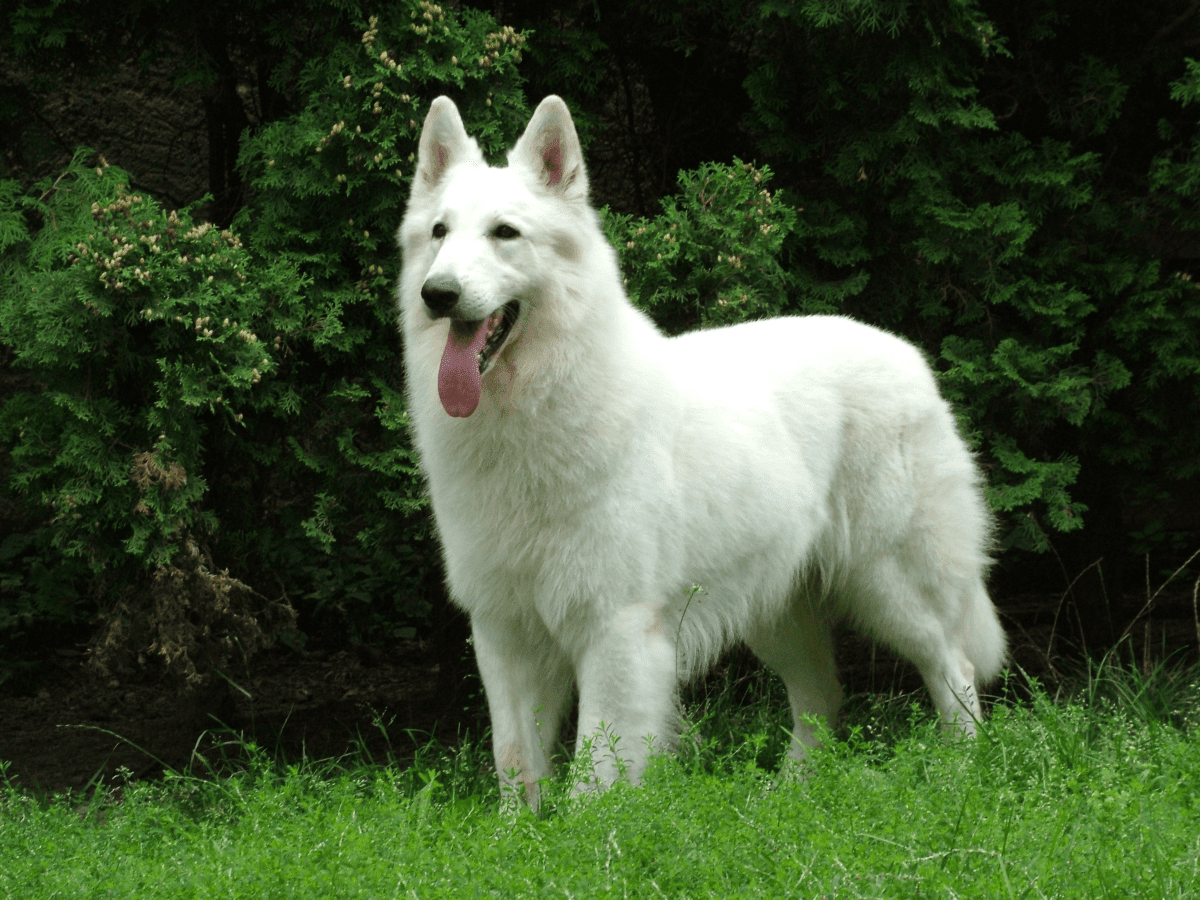
It has all the physical standards as the German Shepherd, except for the color, since this dog is recognized for its pure white color, however, it can be light cream and light biscuit tan.
This dog is super alert, super intelligent, attentive and the best part...super loyal! It's also very friendly with kids, it can be easily trained, and easily adjusted to other dogs and/or pets (yes, even cats!). It is suited for all kinds of sports activities, since it requires a lot of exercise and challenges. It's super confident, very playful, in other words, an excellent companion!
Despite all of this awesomenes, the berger blanc suisse has a tinny thing.. it sheds heavily, like a lot, however, they are easy to groom.

This dog is also known as:
White Swiss Shepherd, Snowy Shepherd, White Suisse Shepherd Dog.

They sure have Health issues, such as:
-Canine Hip Dysplasia (CHD)
-Elbow Dysplasia
-Dental diseases (loss of some teeth)
-Bloating/Stomach Torsion
-Megaesophagus
-Degenerative Joint Disease (including Osteochondritis)
-Malabsorbtion Syndrome
-Skin Allergies
-Lens Luxation
-Von Willebrande Disease (*VWD: bleeding disorder)

As for the Belgian Tervuren, we also should recomend owner to bring the patient for regular check ups, and have a good weight control, but also, for the Berger Blanc Suisse, we must recomend the owner to care for the dog not to be jumping around, because jumping, or being in activities that involve a total movement of the patients abdomen can cause the stomach torsion, and as we know, it is very dangerous for the patient, with only a few hours to treat, and very frequently it ends in a very delicate surgery.

And speaking of bergers...


BERGER PICARD

Origin: France

Group: Herding
Weight: 50-70 Lbs / 23-31 kg
Life Expectancy: 12-14 years
This dog is thought to be the oldest of the french sheepdogs. This dogs are easy to care and mellow, yet mischievous, temperamnt have started the breed back on the road to recovery. Their coat is wheatherproof and harsh and crisp to the touch, the colors fall into two colors, fawn and gray with a range of shad variations.
The Berger Picard's attributes include a lively, intelligent personality and a sensitive and assertive disoisition that responds quickly to obedience training, they are known for having astubborn streak and being reserved towards strangers. They are also energetic and hard working, alert, loyal and sweet-tempered with children. They have a protective nature, which makes them good guard dogs. However, they are not excessive barkers. Some Picards are notoriously picky eaters, and it may be difficult to decide on a diet that yiu and the dog agree on.
Berger Picards need exercise, otherwise boredom will give away to destructive doggie behavior and rowdy play.

They can also be known as: Picardy Shepherd, Bacardi Shepherd, Berger de Picardi.

Their most common health issues are:
-Progresive Retinal Atrophy (PRA)
-Retinal Dysplasia
-Cataracs
-Canine Hip Dysplasia (CHD)
-Hemangiosarcoma
-Lymphosarcoma
-Canine Multifocal Retinopathy (CMR)

If the Berger Picard is not kept active will be in high risk of develop obesity which can lead to to joint issues, digestive issues, and heart issues. Also we must remember that this breed is sensitive to anesthesia, therefore we as veterinarians must be super careful with the type of medication and the dosage.

And the last breed for today's post:


BORZOI


Origin: Russia
Group: Sight Hounds
Weight: 60-105 Lbs / 27-48 kg
Life Expectancy: 10-13 years
The Borzoi is a breed of domestic dog descended from dogs brought to Russia from central Asian countries. It is similar in shape to a Greyhound, and it's also a member of the sighthound family. Borzoi dogs can come in almost any color or a combination of colors.
Their soft undercoat thickens in winter or cold climates, but is shed in hot weather to prevent overheating. 
Borzois are active outdoors, quiet indoors, they are intelligent, sensitive, and reserved around strangers. generally they tend to be good with kids, but precaution should be taken, as they can react to the tease. They can be affectionate with their family, but stubborn and independent. they have a high prey drive and will seize and kill small animals due to its hunting nature.

Also called: Russian Wolfhound, Russkaya Psovaya Borzaya, Psovoi, Psowata Barsaya.

And of course as we have noticed, no breed is zero disease, so let's see now Borzoi's most common health issues:
-Cancer (Lymphosarcoma, osteosarcoma)
-Bloat
-Cardiomyopathy
-Tricuspid Valve Dysplasia
-Hypothyroidism (up to 17% of the Borzoi population)
-Catarcs
-Progresive Retinal Atrophy (PRA)

-Retinal Dysplasia
-Osteochondritis
-Hypertrophic Osteodystrophy
-Wobbler's Syndrom (compression of the spinal cord and/or nerve roots)
-Canine Hip Dysplasia (CHD)
-Allergies (Pyoderma)
-Elbow Hygroma
-Epilepsy (not so common but has been reported)
-Von Willebrande Disease (*VWD: bleeding disorder)

As mentioned before, we must have the owner bring our patients for regular check ups, as soon we can detect and diagnose theese type of diseases, the easier will be for us to treat them.

Hope you might've enjoyed this post, and perhaps if you are searching for a dog, this could be helpful in any way, cheers!


MVZ Carolina Pruneda

viernes, 21 de abril de 2017

PERROS: Ingesta de hierba


La ingesta de hierba en un gran número de perros provoca el vómito, por lo que se ha extendido la idea de que es un método “para purgarse”. Existen diversas teorías al respecto de la ingesta de hierba por los perros.

Una de estas teorías se basa en que la ingesta de hierba es una forma de equilibrar la dieta. Esta teoría es absolutamente falsa, puest
o que la mayoría de nuestras mascotas tienen una dieta equilibrada gracias al consumo de una alimentación comercial.

Otra teoría se basa en que es una costumbre de sus antecesores salvajes, si bien no es lógico pensar que dicha costumbre desemboque habitualmente en el vómito. Por último, existe una teoría, que relaciona la ingesta de hierba con patologías digestivas. 

Esta última es la que actualmente está más aceptada. Los perros que padecen enfermedades digestivas (fundamentalmente enfermedades gástricas y enfermedades duodenales) presentan habitualmente este fenómeno de la ingesta de hierba y su posterior vómito.

La ingesta de hierba no tiene como finalidad realizar ningún tipo de purgación, sino que dichos perros presentan molestias gástricas o duodenales y con la ingesta de hierba y su posterior vómito aparentemente disminuye su molestia.

Esta
mejoría es transitoria, ya que la ingesta de hierba desarrolla una gastritis aguda que puede empeorar la enfermedad gástrica o duodenal ya existente. Estos pacientes, una vez diagnosticada su enfermedad digestiva y puestos en tratamiento, dejan de “comer hierba para purgarse” y lógicamente también dejan de vomitar.

En conclusión, los perros no comen hierba para purgarse, y aquellos que lo hacen, deberían ser correctamente diagnosticados de su patología digestiva y puestos en tratamiento.
 

Fuente: Bayvet, 2007

lunes, 13 de marzo de 2017

Dog Breeds (C)

Good and blessed day may have all of you, colleagues and friends!
Don't think I have forgotten about our dear friends the dogs.
So for the next weeks, we are going to talk about rare yet awesome dog breeds. That's right we will talk about several dog breeds and their behavior, their physical characteristics, and of course as we all love medicine, their most common diseases.
let's start by saying that we will begin with dogs that begin with letter 'C', such as....

Cairn Terrier
This dog is originally from Scotland, is from the Terriers Group, his expected life is between 12-15 years. Is the oldest of the Terrier breeds, it is recognized as one of Scotland's earliest working dogs. Usually these dogs were (and still are) used for hunting and burrowing prey among the cairns.
The Cairn terrier has a coat that is shaggy on the outer coat and a soft inner coat. The color of the Cairn terrier ranges from in colors of blackish, red, brindle, sand and a variety of grays. When a Cairn terrier is a puppy it is hard to say what the color of the adult dog will be because the color of the Cairn terrier changes for several years.
This dog is generally small, males can be between 10-13 inches tall, and females can be between 9-12 inches tall. and its around 14 inches long, however their bone structure is very strong, their shortness gives them the ability to run fast, however not such long distances. They are very energetic dogs!


They are bold, alert, intelligent, and independent. They can be self-willed and stubborn, but they also love attention and will do almost anything to get it. They are friendly and hard workers. They also have a huge tendency to dig a lot, so most veterinarians recommendations are to train these dogs, especially if the house where the dog is has a backyard with a loan. Cairn terriers are fine with children and other pets, although males should be monitored at first meeting. They also bark a lot...

Some of the most common diseases or health problems that Cairn Terriers can have are:
-allergies (itchy skin, bacterial skin infections, irritation of the skin, etc)
-luxating patela (loose knees)
-catarax (which eventually could lead to blindness)
-lens luxation (which if is not well treated could also lead to glaucoma or even to retinal atrophy)
-ocular melanosis (pigmentary glaucoma), you could say that this is practically a pathognomonic disease of Cairn Terriers.
-lysosomage storage disease (globoid cell leukodystrophy)
-pulmonary fibrosis
-epilepsy
-heart disease (mitral valve disease)
-kidney disease (polycystic kidneys)
-liver shunt (low flow inside of the liver)
-hypothyroidism (low activity of thyroid gland, therefore, low metabolism)
-hernias

Not all of theese diseases can occur, however there is a huge chance of this breed to carry at least one or two, most commonly the allergies and the eye diseases.

Now If you preffer big dogs, we can also bring in a rare, yet awesome breed of dogs called...


Cane Corso
This is an Italian breed of dog, for years valued highly in Italy as a companion, guardian and hunter. It is a large Italian Molosser. This dog's life expectancy is around 10-11 years. For years this dog had been valued highly in Italy as a companion, guardian an hunter.It's name derives from cane da corso, an old term for those catch dogs used in rural activities (for cattle and swine; boar hunting, and bear fighting) as distinct from cane da camera, which indicats the catch dog kept as a bodyguard. The Cane Corso is a catch dog also used by night watchmen, keepers, and, in the past, by carters as a drover.


The Cane Corso is well muscled and looks more athletic than most other mastiffs, tending less toward sheer bulk like the Neapolitan Mastiff and more towards definition like the original Old English Bulldog.
The Corsos appear in two basic coat colors: black and fawn. However genetic pigment modifications have led to other color samples such as: tigrato, black brindle, blue brindle, blue, formentino, and even beige.
Theese dogs are easy to obedience train, have a willingness to please, and form a close attachment with their primary owner. Any owner understands that the difficult part is controlling and molding the Corso's strong protective instinct. A Cane Corso is highly suspicious of strangers, and for this reason aggression should never be encouraged. They tend to be a quiet breed, though they will bark at anything about which they are unsure. So basically they love staying next to their owner all the time.

Let'sjump into Cane Corso's most common diseases...
-Canine Hip Dysplasia
-Panrosteitis (when the large bones are growing to fast it provokes a pain in the extremities of the large bones)
-Gastric torsion (also known as bloat, when the dog is too big, the muscles and ligaments that hold the stomach are not strong enough, so when the dog rolls over, or jumps a lot, the stomach may twist and torse)
-Entropion (inversion of the eye lid inside, so the lashes rub against the cornea of the eye of the dog)
-Ectoprion (inversion of the eye lid outside, so the mucuse is exposed)
-Canine Nictitans Gland Prolapse (also known as cherry eye, the gland of the third eye lid prolapses, and it's exposed)
-Canine Demodicosis (the dog's immune system is unable to keep the mies under control so it causes a skin rash due to mites)
-Epilepsy (unprovoked seizures, this is genetic basically)

Now let's see another short but simpathetic dog:

Cardigan Welsh Corgi (better known as 'Corgi')

Originated in Wales, from the group of the herding kind, their life expectancy is between 12 and 14 years. In Celtic, corgi means 'dog'. There are other theories that the name came from the words cor (dwarf), and gi (dog); or possibly from simply the word cur, which means 'to watch over'.
The Cardigan is long and very low to the ground. This breed is about 36 inches to 43 inches long from the nose to the tip of its tail. Their coat has two different types of coat. The first coat is a harsh medium lenght outer coat with a soft dense inner coat. The color of the coat is like bindle, blue merle, black, black and tan, black and brindle, sable, and red, often with markings. 
This breed is known to have white on the chest, neck, legs, muzzle, underneath their body, and sometimes on the tip of the tail.
These dogs are active, obedient, intelligent and alert. They make good watch dogs, as well as good guard dogs. They can be possesive, and can be scrappy with other dogs, however with their friends and family they are very playful and affectionate and loving. They are fun, loving, easygoing, and sprightly.The Cardigan needs to be socialized with other pets, especially cats, but does well with theirown kind as well.
They need a lot of grooming since they shed a lot of hair.

Now medically speaking, these are the most comon health problems for the cardigan welsh corgi:
-Hip Dysplasia 
-Intervertebral disc disease
-Progressive retinal athrophy (PRA)
-Catarax
-Lens luxation
-Epilepsy
-Luxatng patella
-Skin allergies
-Blood clotting disease (Von willebrand's disease)
-Immunoglobulin deficiency

And of course, I was going to put this one, which is very loving and caring dog...

Carolina Dog

Yes ladies and gentlemen, there is a dog called Carolina Dog, in case you didn't know, is a type of pariah dog discovered in the late 1970's. They were located living in isolated stretchs of longleaf pines and cypress swamps in southeastern united states.
The Carolina Dog is one of the very few breeds existing today that is truly a primitive dog, a result of natural selection for survival in nature, and not of selective breeding. Wild specimens are still known, so this means that carolina dog is not a completely domesticated canine.
This dog that has survived as a free living animal in the swamps, savannahs, and forests of South Carolina and Georgia for thousands of years, has also proven to be highly adaptable and amenable to domestication, and an excellent pet.
Carolina dogs weight very from 30 to 44 lbs aproximately, their life expectancy is 12-14 years , so as you can see, this is a medium sized dog, and doesn't have a very high excersise requirement. 
The usual coat color for Carolina dog is deep red ginger, hoever pale buff markings may be present on the sides of the muzzle and over the shoulders.

Now on the medical side, any genetic defects would have been quicly eliminated by the demands for survival, how ever this dog still has a very narrow gene pool for diseases. The most common diseases for Carolina dog are:
-Hip dysplasia
-Elbow dysplasia
-Patellar luxation
-Progressive retinal atrophy (PRA)
-Catarax
-Demodex/demodicosis
-Cancer

So there, 4 breeds that start with letter C, on our nexts post we will continue with other breeds, you can also make suggestions on which letter or even which breed.
Hope ya'll have enjoyed it!


MVZ Carolina Pruneda

viernes, 17 de febrero de 2017

The Cat Area 3: Chlamydia in Cats

Chlamydia in cats (Feline Chlamydia)

Good day colleagues and friends, so today we will talk a little bit about a respiratory infection in cats called Feline Chlamydia, also known as Feline Chlamydiosis.
The first thing we need to know about this disease is that it is caused by a bacteria called Chlamydia psitacci, this is an intracellular bacteria (a bacteria which lives inside the host's cells), The family Chlamydiae is now divided into two genera, Chlamydia and Chlamydophila. The genus Chlamydophila contains four species, including Chlamydophila felis, a causative agent for conjunctivitis in cats.
This is a zoonotic disease, this means that it is a transmissible disease to humans as well.
How does the infection takes place:
Transmission can take place even without direct contact with an infected animal, as the molecules from a cough or sneeze can travel across a room, a human caretaker can carry the bacteria and spread it by touch, or the cat may come into contact with a contaminated object, such as in a bedding or feeding area.


The bacteria attaches itself to the mucosal cells of the conjunctiva, gastrointestinal and genital tracts. The eyes become red, inflamed and develop a discharge, due to basic immune response.


There are 2 basic ways of infection:
Direct: Contact with an infected cat, such as nasal and ocular discharges. Kittens may become infected during the birth process.
Indirect: even though this bacteria doesn't survive well in the environment, contact with food bowls, bedding, litter trays, pet owner's hands etc. It is always advisable to exercise caution when dealing with infected cats and practice routine hand washing and disinfecting in order to minimize the risks of infecting other cats.

Clinical signs of Chlamydia in cats:
-sneezing
-watery eyes
-discharge from eyes
-coughing
-difficulty breathing
-runny nose
-anorexia (lack of appetite)
-fever
-pneumonia
-mucus enlargement
-nose lesions


We do have to consider, that all those signs are not always present altogether.  The predominant clinical sign of Chlamydia in cats is conjunctivitis; an abnormal eye discharge due to inflammation of the conjunctiva, the membrane lining the inside of the eyelid and the white part of the eye itself, (known as the sclera). The eyes initially develop a watery  discharge, as the infection progresses, the conjunctiva becomes reddened and swollen and the discharge becomes thicker. It may start out with discharge from one eye but usually, spreads to both eyes. Symptoms usually appear around 5 days after exposure.
It is possible for a cat to appear outwardly healthy but be shedding the bacteria which can be passed onto other cats via eye discharge.
Chlamydiosis can affect any cats but it is more often seen in kittens between 5 and 9 months of age and cats in overcrowded or stressful environments such as animal shelters.
In young kittens, chlamydiosis may cause pneumonia.


Now lets go to the part of how we know that it is actually chlamydiosis, the DIAGNOSE part...


Chlamydia can be diagnosed by ultimate and very complicated methods such as PCR (polymerase chain reaction), or Immunofluorescent assay (IFA), but the good news is that we don't really have to go that far, nor complicate ourselves, because we can also do a simple swap and send it to the lab for a bacterial culture. Sure it could take a couple of days to grow, but it is simple, cheap, and accurate, because really, chlamydiosis is not hard to diagnose with clinical signs, so mainly we do a bacterial culture just to confirm.

How do we treat chlamydiosis?
I'm pretty sure you all know the answer, antibiotics! yes, but what kind of antibiotics are the right suit for this bacteria...
As we know, Chlamydia psitacci is a respiratory tract bacteria, so we mainly want to go with respiratory antibiotics such as clindamicyn, tetracycline or doxycycline, but also we want to give oral antibiotics, or even topic antibiotics, this is so we don't give that bacteria a chance to flee to another organ and grow resistance. In to the eyes, we should give antibiotics as chloranphenicol or even terramycin(oxytetracycline), and let's not forget about the pain killers for the eyes, such as diclofenac (you must remember to give those in drops, and make sure to apply those drops as cold as just taken out of the fridge, because if you don't, trust me, the cat's eyes are going to feel in burning pain, yes diclofecnac burns the eyes).  
Feline Chlamydiosis is a disease that may take from 3 or 4 weeks, sometimes even up to 3 months if the treatment is not well given. 

Also I would like to add, that we can always prevent chlamydia infection among our patients, as most of you know, the best way is to keep them separate, often clean their areas (speacially with disinfectant), wash our hands before and after touching, holding, or lifting any of our patients and of course, vaccinating the healthy cats, we most keep our protocols for isolated patients. If the cats belong to a shelter, the best thing to do is to completely isolate the new, unvaccinated and sick cats from the normal, healthy ones, for at least 1-2 weeks (which is the regular time for incubation of a pathogen in a host's body to develop a disease).

I hope this is helpful for you, or at least of interest, if you have any questions feel free to ask them, have a great weekend!

MVZ Carolina Pruneda

lunes, 13 de febrero de 2017

Organs of the Immune System (Secondary Lymphoid Ogans)


Good day friends and colleagues, in this post we are going to continue talking about the lymphoid organs, but this time we will talk about the secondary lymphoid organs, what they do, and how they work.
So despite the primary lymphoid organs develop early in fetal life, the secondary lymphoid organs arise late in fetal life and even persist in adults, also they enlarge in response to antigenic stimulation.
Some of the secondary lymphoid organs include the spleen, the lymph nodes, the tonsils, and lymphoid tissues in the intestinal, urogenital and respiratory tracts.
The anatomical structure of these organs is therefore designed to facilitate antigen trapping because they contain dendritic cells that trap and process antigens and lymphocytes that mediate the immune responses.

Now let's see how the organs work:

Lymph nodes: they consist of a reticular network filled with lymphocytes, macrophages, and dendritic cells through which lymphatic sinuses penetrate. Lymph nodes are round or bean-shaped structures that are widely distributed throughout the body. 
Imbedded in connective tissue or fat, they are concentrated in the cervical, axillary, and inguinal regions – the neck, armpits, and groin, respectively. They are typically less than ½ inch in length, depending on the size of the animal.
Lymph nodes are enclosed by a capsule of connective tissue and comprised of several compartments called "lymph nodules." The nodules are masses of T-cells, B-cells, and macrophages. 
 Macrophages are specialized cells that ingest and destroy foreign material.
The nodules are separated by spaces called "lymph sinuses." The vessels that deliver unfiltered lymph are called "afferent vessels," and there are several per node. The lymph is then filtered for antigens and particulate matter, and an immune response is generated, if necessary. The filtered lymph leaves the node through one or two efferent vessels near an indentation called the "hilum." Blood vessels also enter and exit the node at the hilum.
In Lymph node that have been stimulated by antigen, some of the cells within these nodules expand to form foci of dividing cells called germinal centers. These germinal centers have 2 types of zones: light and dark.
the dark zones are sites where B cells proliferate and undergo a process called somatic mutation.
the light zones are sites where immunoglobulin class switching memory B-cell formation occur.

The lymphatic vessels: link together all of the secondary organs and also connect to the cardiovascular system. They provide a route for the one-way flow of lymph from the tissues of the body to the heart. Lymph is the clear, yellowish fluid that is collected from the interstitial spaces (the spaces between the cells of a tissue) into lymphatic capillaries.
The lymphatic vessels are structured similar to veins, with thin walls and valves to prevent backflow. They are not muscular vessels, and external forces such as limb movement regulate the flow of lymph. Once in the capillaries, the lymph moves into progressively larger vessels, passes through the lymph nodes and/or spleen, reaches the large ducts, and enters the blood circulation near the junctions of the jugular and subclavian veins in the upper chest. Thus, the fluid and proteins are eventually returned to the blood, which helps maintain the proper balance of fluid between the blood vessels and the tissues. All of the lymph from the lower body, left arm, and left thorax are drained through the thoracic duct into the junction of the left jugular and subclavian veins. The fluids from the neck, right arm, and right thorax empty into the right lymphatic duct which joins the venous system at the junction of the right jugular and subclavian veins.
Lymphatic capillaries: are interwoven with the blood capillaries. Fluid and proteins are forced out of the arterial end of the blood capillary and into the interstitial space. About 90% of the fluid is reabsorbed in the venous end of the blood capillary, but none of the proteins are able to reenter the blood vessels because they cannot fit through the tight junctions of the cells. The lymph capillaries have extremely loose cell junctions, however, and they are able to absorb the remaining 10% of the fluid along with the plasma proteins. Once inside of the lymph vessels, the fluid is then termed "lymph."

Lymphoid tissues in the intestinal tract: Near the small intestine, where fats are digested and absorbed, the lymphatic vessels have a special function and, therefore, a special name. They are involved in the absorption of digested fat from the small intestine, and are called "lacteals". After a meal the fluid within the lacteals generally has a fat content of 1-2%, and it appears cloudy. This cloudy lymph in the lacteals is called "chyle."

Hemolymph Nodes: are structurally similar to the lymph nodes found in association with the blood vessels of ruminants and other mammals. They differ from conventional lymph nodes in that their lymphatic sinuses contain numerous red cells. They have a cortex containing germinal centers and B cells as well. T cells predominate at the center in association with lymphatic sinuses. There are some differences, however, in the characteristics of these T cells are compared to conventional lymph nodes. They may combine features of both the spleen and lymph nodes.


Spleen: is an organ located in the upper left portion of the abdominal cavity along the outside curve of the stomach that filters blood. The filtering process removes both antigenic particles and aged blood cells. Also stores red cells and platelets and undertakes red cell production in the fetus. It is therefore divided into two compartments: one for antigen trapping and for red cell storage, called red pulp, and one rich in lymphocytes where immune responses occur, called the white pulp.

So generally there is lymphoid tissue also in other organs such as the lungs, the liver and throughout the body. Later we can discuss a little more about how some of theese immune process occurs, such as the simple inflammation or even a bruise.
For now this is in a few words how the lymphoid organs work.
Have a great week everyone!

MVZ Carolina Pruneda

lunes, 6 de febrero de 2017

Organs of the Immune System (Lymphoid Organs)


Good day colleagues and friends, so a couple of days ago, a friend of mine asked me what are the lymphoid organs, and well, that's what we are going to talk about today: the lymphoid organs and how they work!
First of all, we ought to know that the lymphocytes are cells that help protect the body of all animals (well yes, including humans!). The lymphocytes fall into 2 major populations called T cells and B cells based on the organs in which they mature. So therefore the organs that regulate the growth and maturation of these cells are called the primary lymphoid organs.
These include the bursa of Fabricius in birds only, the bone marrow in primates and rodents, and intestinal lymphoid tissues in rabbit, ruminants, and pigs.
The primary Lymphoid organs all develop early in fetal life. As animals develop, newly produced, immature lymphocytes migrate from the bone marrow to the primary lymphoid organs where they mature.
It is very important to remember that the primary lymphoid organs are not sites where lymphocytes encounter antigens and so they do not enlarge in response to antigenic stimulation.

Ok now we are going to mention the Primary Lymphoid organs and what their functions are:


Thymus: is located in the thoracic cavity in front of and below the heart. In horses, cattle, sheep, pigs, and chickens it also extends up the neck as far as the thyroid gland. The size of the Thymus varies, it's relative size being greatest in newborn animals and it's absolute size being greatest at pubrty. It may be very small and difficult to find in adult animals.The main function of the thymus is to produce a development in the immune system's cells called: lymphocytes T (which defend the body by responding to antigens).
There are three types of Lymphocytes T: lymphocytes T cytotoxic,  lymphocytes T auxillaires. and lymphocytes T regulator. And of course we shall talk about theese cells later on.
Back to the thymus, this organ is mainly responsible for the hormons production that helps regulate the growth and the definition of the lymphocytes in their characteristics.
Some of the hormones that are produced by the thymus are peptides such as: thymosins, thymopoietins, thymic humoral factor, thymulin and thymostimulins. The thymulin is especially

Bursa of Fabricius:This organ is only found in birds, it is a round sac located just above the
cloaca. The bursa reaches its greatest size in the chickens about 1 to 2 weeks after hatching and then shrinks as the bird ages. The main function of this organ is maturating and causing the differentiation of B lymphocytes (antibody-forming system), it also produces the hormone bursin, which activates B lymphocytes.
The bursa acts like the thymus insofar as immature cells produced in the bone marrow migrate to the bursa. These cells then proliferate rapidly but 90-95% of these B cells die by apoptosis (physiological cell death or cell suicide mediated by normal body processes).


Peyer Patches: also known as PPs, are lymphoid organs located in the walls of the small intestine. Depending on the specie they can be found in several areas in the intestine walls.

They are divided in two groups: group I includes ruminants, pigs, horses, dogs and humans. Group II includes other mammals such as cats, rabbits and rodents.
In group I, 80-90% of the Peyer's Patches are found in the ileum where they form a single continuous structure that extends forward from the ileocecal junction. Ileal PPs consist of densely packed lymphoid follicles, each separated by a connective tissue sheath, and contain only B cells.
In group II, all PP's are located at random intervals in the ileum and jejunum. In these mamals, the PPs do not develop until 2 to 4 weeks after birth and persist into old age.
The main function of the PPs are to grow and proliferate B cells, althoughmost cells undergo apoptosis (cellular death), the survivors are released into the circulation, then they produce antibodies.

Lymphoglandular complexes: they are submucosal masses of lymphoid tissue penetrated by radially branching extensions of mucosal glands.These glands penetrate both the submucosa and the lymphoid nodule. Their function is unknwon in full, but contain plasma cells, and are sites of antibody production, they may be antigen-sampling sites.


Bone Marrow: Lymphoid cells developing and maturing here are referred to as B cells (B for Bursa or for Bone marrow). This is the site for proliferation for stem cells and for the origin of pre-B cells and their maturation to become immunoglobulin-producing lymphocites. Like thymic selection durng T-cells process withing the bone marrow eliminates B cells with self reactive antibody receptor.
There is no exclusive  B-cell development site in the bone marrow, although it is suggested that precursor B cells develop at the outer edge of the marrow and migrate to the center as they multiply.


Now that we have mentioned the primary lymphoid organs, we can go ahead and mention the secondary Lymphoid organs, which are: lymph nodes, hemolymph node, and the spleen.
 There are other secondary Lymphoid organs, however, these are the most important, and we will get into details with theese in our next post.

Thank you all for your support, and let's keep learning! 
Have a great week everyone.


MVZ Carolina Pruneda

viernes, 3 de febrero de 2017

The Cat Area 2: Sustancias Toxicas para los Gatos (Parte VI)

Chocolate


Hola queridos colegas y amigos, en esta ocasión, hablaremos particularmente sobre los efectos del chocolate, no solo en nuestros pacientes felinos, sino también en los caninos.

Es bien sabido entre los veterinarios que el chocolate es malo para nuestros pacientes, pero, de qué manera? como podemos reconocer que es el chocolate la sustancia que esta dañando a nuestros pacientes? que tratamientos podemos utilizar?

Primero que nada el chocolate que es generalmente a base del cacao, contiene una sustancia que lo hace toxico, la teobromina. La teobromina, en pequeñas especies (sobre todo en el gato), se elimina muy difícilmente de su organismo, por lo que se acumula en la sangre y comienza a producir deshidratación en las células, por lo cual el paciente experimentara sed excesiva.


Además, la teobromina produce alteraciones en el sistema nervioso, por lo cual, el paciente desarrollara una hiperactividad, aceleración del ritmo cardiaco, vómitos, fallos sistémicos, coma, y si pasan más de 24 hrs después de que el paciente lo haya consumido sin recibir atención medica, es muy probable que el paciente pueda fallecer de un ataque cardiaco (claro que estos son casos extremadamente aislados, y dependerán en gran manera en si el paciente fue atendido a tiempo o no y de la cantidad ingerida de chocolate).

Pero, la teobromina no es la única sustancia toxica en el chocolate, dependiendo
de si es un chocolate a base de leche o un chocolate negro, también depende la cantidad de cafeína, la cual también es una sustancia en cierta forma toxica para los gatos y los perros.  Ya que la cafeína, es una sustancia altamente estimulante, tanto del sistema nervioso como del corazón, en raras ocasiones puede también estimular la actividad renal y causar incontinencia urinaria, la cual libera mayor cantidad de fluidos fuera del organismo, lo cual conlleva a una deshidratación aun mayor.

Otros signos comunes de intoxicación por chocolate:


agitación (debido a la estimulación cardiaca por la cafeína)
espasmos musculares (debido al daño en el sistema nervioso)
disfunción renal (debido a la estimulación de la actividad renal)

Cual es la dosis letal de chocolate?
de 80 – 100 gr. de chocolate ingerido por kilo del animal

Que otras sustancias contiene el chocolate que pudiesen ser dañinas en los gatos y perros?
La leche, hay chocolates que con el objetivo de hacerlos más cremosos o suaves al gusto contienen una buena cantidad de leche. A medida en que los gatos van madurando su intestino, la mayoría se vuelven intolerantes a la lactosa, algunos la toleran poco, sin embargo, en su gran mayoría la leche se vuelve un alimento que no deben ingerir pues puede ocasionarles vómitos, diarreas, y otros problemas digestivos. Los cuales, cuando se tiene un gato que tiene acceso a la calle, es muy difícil detectarlos, pues el instinto natural del gato, es salir y hacer sus necesidades fisiológicas en tierra, y enterrar sus heces, pues su instinto le determina que debe protegerse de otros depredadores más grandes.

Como podemos tratar a un perro o a un gato que ha ingerido chocolate y presente signos de intoxicación?
No existe antídoto específico.
Inducir el vómito (hasta 6-8 horas tras la ingestión).
Realizar lavado gástrico.
Administrar carbón activado 1g/kg, repetir cada 2-6 horas, y un catártico salino.
Vigilar el equilibrio electrolítico y la hidratación. Administrar líquidos intravenosos.
Controlar la frecuencia cardíaca (ECG): Administrar atropina (0'02 mg/kg IV), si hay bradicardia, lidocaína.
Si hay contracciones ventriculares prematuras y b-bloqueantes si hay taquicardia (propanolol 0'04-0'06 mg/kg en inyección IV lenta).
Cateterizar la vejiga urinaria con objeto de evitar la reabsorción.
Sedación con diazepam(gatos), o fenobarbital.

Con esto concluimos el post de hoy sobre el chocolate en gatos (y en perros también), espero que les sea de ayuda. 
Y los esperamos en la próxima sección de The Cat Area todos los viernes recuerden es exclusivo de gatos!
Les mandamos un fuerte abrazo y que tengan un lindo fin de semana!


MVZ Carolina Pruneda